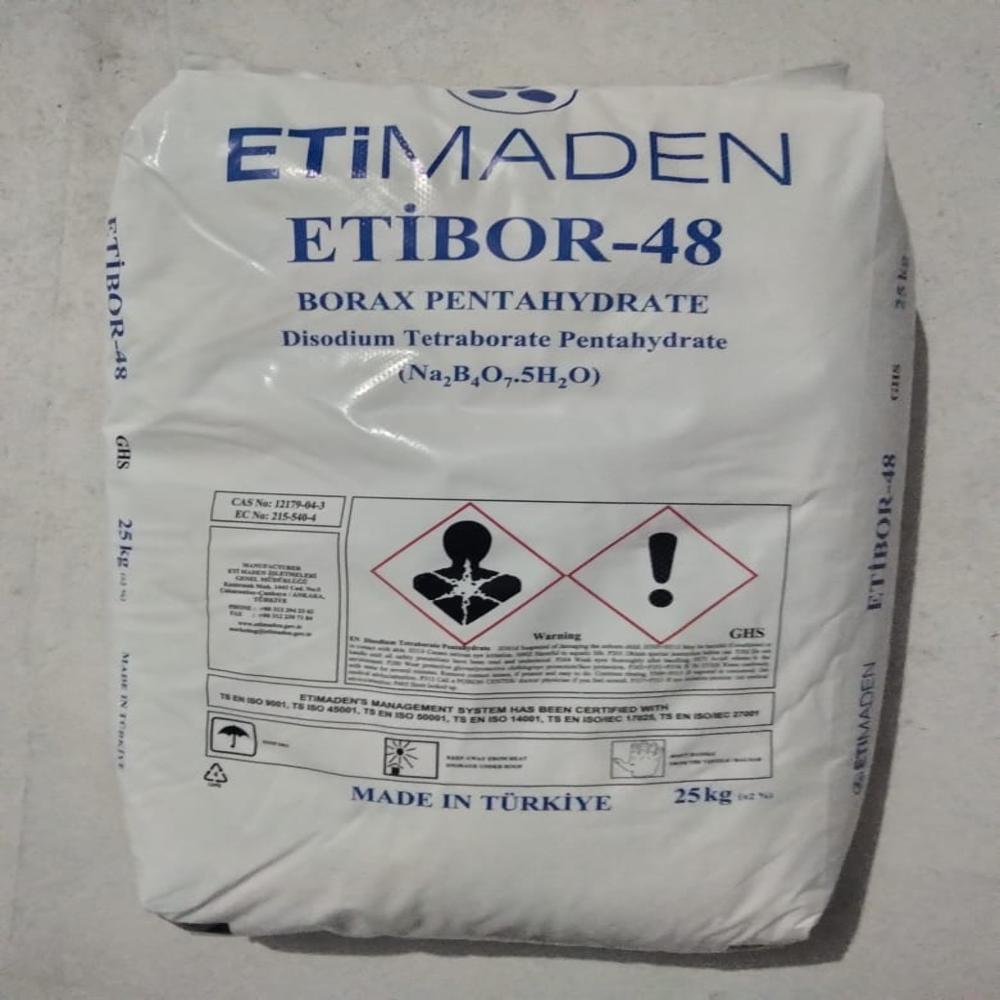
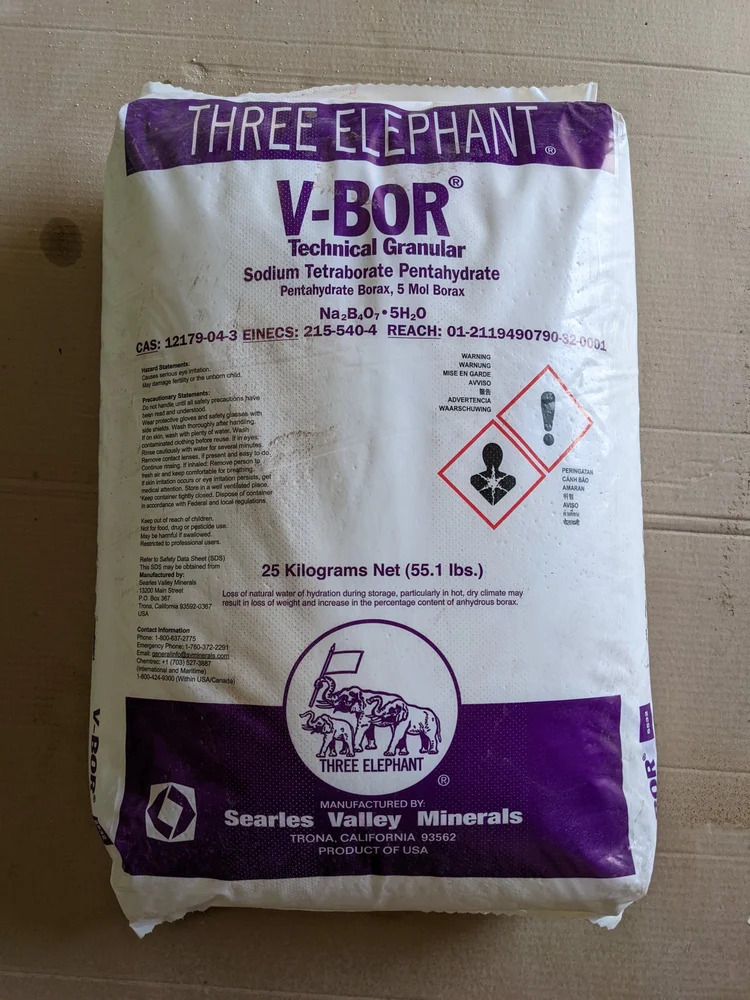
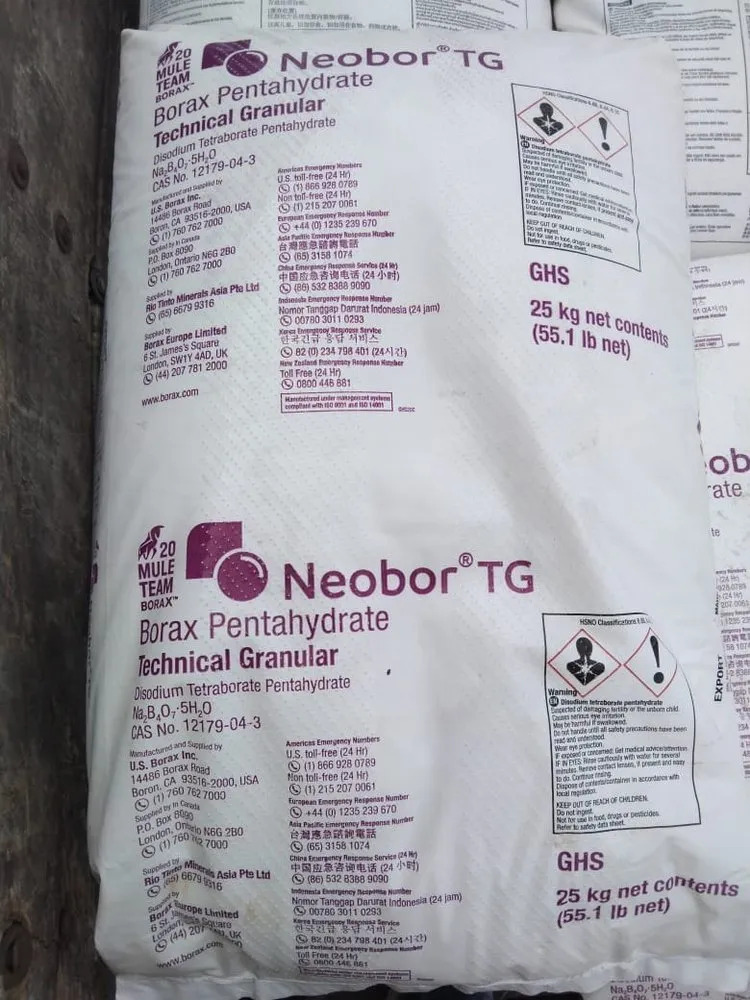
BORAX ET BOR About
- Glass and Ceramics: Used to make fiberglass, insulation glass, and enamels.
- Agriculture: Applied as a boron fertilizer to correct soil deficiencies and help crop growth.
- Manufacturing: Added to adhesives, flame retardants, and metal-welding fluxes.
- Cleaning: Included in industrial and household detergent formulations.
If you're looking for specific guidance, tell me:
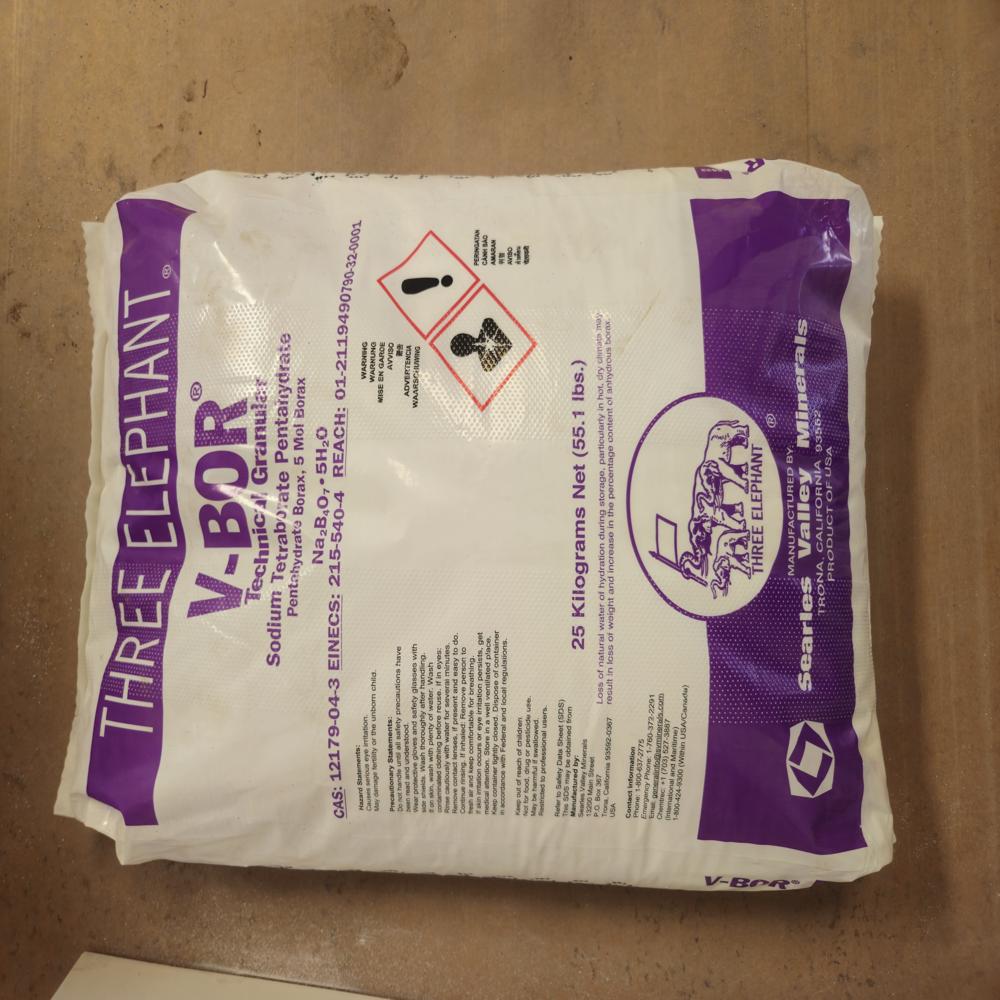
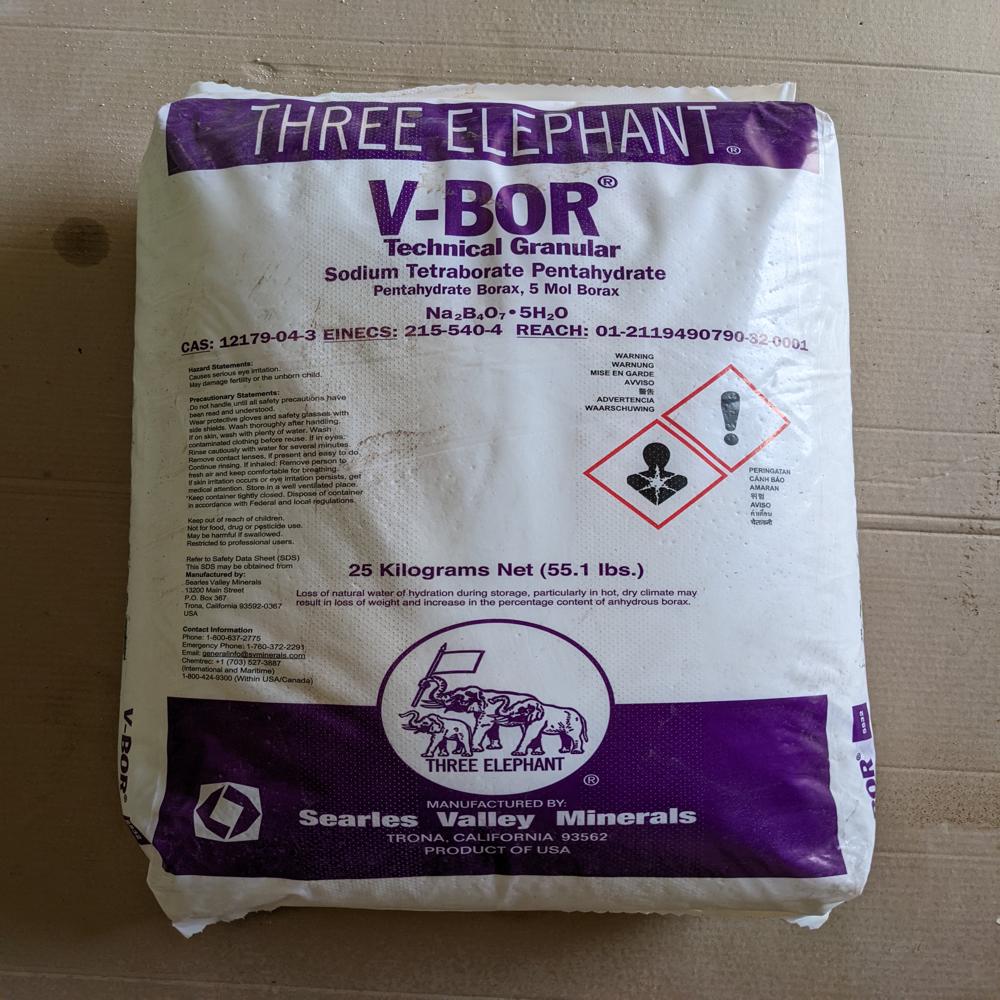
Multi-Industry ApplicationV-BOR Borax is prized for its adaptability across a range of industries. It functions as a flux in metal processing, a key component in glass and ceramics, and enhances cleaning efficiency in detergents. It is also used in water treatment processes and as a flame retardant additive, contributing both functionality and safety to industrial applications.
Safe Handling and StorageThis chemical is non-poisonous under standard conditions, though care should be taken to avoid ingestion in large amounts. As an inorganic salt, it has no flash point and should be stored in tightly closed containers in a dry, ventilated location to maintain its crystalline quality and chemical stability.
FAQ's of BORAX ET BOR:
Q: How should V-BOR Borax be stored to maintain product quality?
A: V-BOR Borax should be kept in a dry, well-ventilated area in tightly sealed containers to prevent moisture absorption and maintain its crystalline powder form.
Q: What are the primary uses of V-BOR Borax in industry?
A: This product is primarily used in glass and ceramics manufacturing, detergents, water treatment, as a flux, in buffer solutions, and as a flame retardant due to its chemical properties and high solubility.
Q: When is V-BOR Borax typically added during the manufacturing process?
A: In glass and ceramics production, V-BOR Borax is usually incorporated during the raw material mixing stage, while in detergent formulation, it is blended into the mixture to enhance cleaning and buffering capacities.
Q: Where is V-BOR Borax sourced and produced?
A: V-BOR Borax is originated, manufactured, and exported from Turkey, ensuring reliable supply and consistent product quality.
Q: What are the safety considerations for using V-BOR Borax?
A: While V-BOR Borax is classified as non-poisonous, ingestion of large amounts can be harmful. It is odorless and stable but should always be handled with appropriate safety measures, including avoiding direct consumption and using suitable protective equipment.
Q: How does V-BOR Borax benefit glass and ceramic manufacturing?
A: In glass and ceramics, it acts as a flux to lower melting points and enhance workability, as well as an additive that improves hardness and durability in the final product.
Q: What advantages does V-BOR Borax offer in detergent and water treatment applications?
A: V-BOR Borax provides buffering action and enhances detergent cleaning efficacy, while in water treatment it helps control pH and supports the removal of impurities.





 Send Inquiry



 Send Inquiry
 Send Inquiry
 Send SMS


 English
 Spanish
 French
 German
 Italian
 Chinese (Simplified)
 Japanese
 Korean
 Arabic
 Portuguese